Italian translation
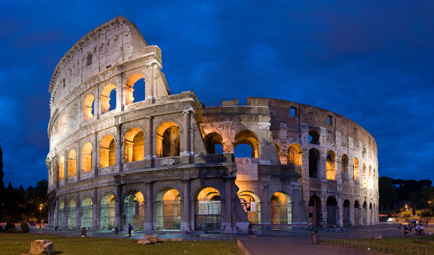
I am a man of Rome, Italy. Some of my ancestors, many centuries ago, were already citizens of Rome. So I guess I am a real Roman, or sort of, since some barbaric blood must unquestionably flow in my veins, Germanic probably and Gallic from the Alpine region.
My mother tongue is Italian, not very different from the Latin spoken by the common people at the times of the late Roman Empire.
The reason I am attempting to communicate in this Northern language – which I do not master entirely and which, though a bit chilly to my heart, I find not entirely deprived of charm – is that variety excites me like a drug and I am tired of talking mostly to my countrymen, this lingua franca, English, allowing me hopefully a wider exchange of ideas.
Why this blog

One reason, I have said, is wider communication.
But what can a Roman of today say to the world? Such a big statement (if there weren’t the Web to make it not entirely such.)
I think it is a great privilege to be born and to be raised here, such a special place, to the extent that something must have penetrated, something distinctive and worthy of being transmitted – in order to be able, in our turn, to receive.
I hope for comments from Western and non-Western people, since Rome and the Romans have a mediation nature that comes from the Mediterranean.
Rome in some way is more Mediterranean than European.
However, as she was already universal during the ancient Roman days, she has continued to be universal as a religious centre, like Mecca or Jerusalem, which makes Rome something way beyond Europe (*).
ψ
Religion will not be a central topic here (there excepting ancient religions, of course) since, greatly respecting all faiths I personally have none, being an agnostic.
I like to think that I am similar to those Romans of the past who counted mostly on knowledge and reason (the followers of Epicure, Ἐπίκουρος – one among many possible ancient examples.)
Three Reasons for Uniqueness
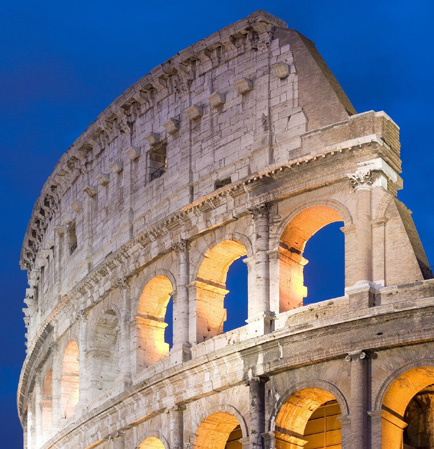
Ages have passed since this great city was the capital of the known world, this role now being played by New York, London or Shanghai, perhaps.
Rome is though unique in the first place because “among all the greatest cities of the ancient world – Nineveh, Babylon, Alexandria, Tyre, Athens, Carthage, Antiochia – she is the only one that has continued to exist without any interruption, never reduced to a semi-abandoned village but rather finding herself often in the middle of world events and, equally often, paying for that a price (**).”
Secondly, and more importantly, Rome is the city of the soul (as Byron, Goethe and Victor Hugo put it,) of our authentic Western soul, since Europe and the West were shaped here and these roots are sacred – to me surely, and I think and hope to most of us.
These roots we have to rediscover in order to better open up to others in a new spirit of humanitas and conciliation (two chief components of the everlasting Roman mind.)
We all here in the West must encourage a totally new attitude which may enable us to better face both our present crisis of values and the radical changes looming ahead which might cause our swift decline.
Lastly, Rome, the eternal city, is unique because she is also one of the most beautiful cities in the world, if not the most beautiful.
Beyond her imperial testimonies, her stupendous urban spaces and squares, even small piazzas and alleys radiate that “sacred aura” which comes from the millennia and to which ever increasing multitudes from every land come to pay their tribute.
The capital of our beloved and civilised French cousins, Lutetia Parisiorum (it’s how the Romans called Paris, after the Parisii, a tribe of the Gallic Senones,) was not but a village until the year 1000 AD. “1700 years younger than Rome! It shows, one can feel it (***).”
Fragments Sent in a Bottle
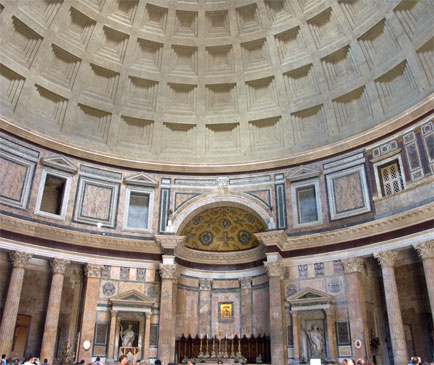
Scattered fragments of this special identity inserted in a bottle and sent across the Web: this shall be the activity of this blog.
The conveyor of the message is not so important in relation to the greatness of the source and to one ingredient this conveyor might, willingly or unwillingly, possess: he perhaps being like a fossil from a distant past which is dead though, astoundingly enough, alive yet in so many Italians.
Let us admit it. In some central and especially southern areas of this country, minds and habits survive that may puzzle foreigners, historical remnants whose disadvantages towards modernity appear evident. Are they only disadvantages?
All Things Considered
This and other topics will be discussed here by a 60-year-old Roman (2014: 66) whose knowledge can be located at a medium level, with interfaces towards the upper and the lower layers of knowledge.
He will try his best to transmit something useful to others (and to himself) having been an ancient-history & literature educator for 16 years, then converted to Systems Engineering & Training for the last 14 years.
He hopes this blog will allow him to brush up humanities back, which is daunting at his age (not to mention the crazy idea of blogging in English, Italian and bits of other languages.)
ψ
If not profundity of knowledge, he might though have an advantage (still to be proved) over many foreign commentators even born in one of the ex-provinces of the ancient Roman Empire.
The plus of being a witness from right here.
The advantage of being a Man of Roma.


 Man of Roma
Rome as a place has always fascinated me! Also Greece because of the sheer historical significance they have and the position they hold in History! .. Thanks for all the information… You have a regular reader! 🙂
Thank you very much! This is the first comment I’ve ever receive and I like it it is from an Indian!
I am new to blogging and you also have a regular reader (plus I am also working with computers, being a systems engineer). India intrigues me indeed and I would like to understand more about your civilisation, so much on the move, while both Italy and Europe stagnate a bit.
Ciao!
I speak enough Italian to order a full breakfast, lol.
Rome is something that fascinates me. I’m one of those odd folks that likes history… particularly ancient and medieval history. I want to visit Rome, Venice and Bologna one day. 🙂
Looking forward to more! 🙂
WOW! What a wonderful writing. I lived there for more than 20 years. I didn’t know these things. Keep writing more and more. We would love to read.
Good luck
Thank you, Ashish and Edward. You both are too kind. I only hope I won’t disappoint you. When I started this blogging thing I was actually hoping to communicate to people from different parts of the world. As an IT teacher I sometimes teach to international students, but not as much as I would. This blog seems to make this communication wider and, great, on different topics than IT – such as history, humanities etc. – I am really addicted to. (I too love IT but I need variety). So, it doesn’t matter if feedback and readers are 20 or 20,000. It is so fascinating and exciting!
When I received your email I immediately came to look at the site. I quickly read through a couple of your posts and thought of our conversations during breaks and sometimes during class. I always enjoyed our conversations and your ability to switch from DNS and IP addresses to the influence of ancient Greeks on Texas cowboys! LOL! I am glad you started this blog, now the rest of the world can see how interesting, complicated, tormented, knowledgeable and weird you are!
In boca lupo! Un abbraccio forte.
One of your IT students.
Thank you so much.
My students have a special place in my heart. I’m glad you sent me a comment though I must confess it’s thanks to you and the rest of the classroom if our minds could depart from Rome (and TCP/IP lol), travel to Las Vegas (or Samarkand) and then get back to the Romans of today, whose funny slang, by the way, you seem to learn fast.
You made me laugh so much I really sometimes wonder where your humour comes from. You were always so relaxed – as if living permanently on a tropical beach – then suddenly you burst like lightning with actions and funny comments (hands, eyes, whole body following …).
Thank you and see you.
A very interesting blog, Man of Roma. I think you are right up my alley. I’ll be reading you regularly.
@100swallows
I have the same feeling about your blog. I’ll be reading you too.
Regards
Hi! Interesting Blog, your very into the historical background of your heritage! I also see you teach IT in Rome? That’s cool, I love to meet Italians who study IT, well mostly because I study IT in the States and it’s interesting to talk about it with Italians. Also I hope to move there after graduation, and who knows if I’ll be able to do IT work. Anwayz ciao!
Lisa
@Lisa
Thanks for popping in Lisa. I have seen from your blog that you have studied in Bologna. I agree with you. Bologna is a hidden gem in this country (and the food, wow…). Everybody is talking about Venice, Rome, Florence etc. but there are places like Bologna which can provide wonderful surprises. As far as IT, I like it a lot but, as you can tell from my blog, I would like to go back to my first love … arts, history, philosophy etc.. Ready though for any conversation about IT or anything you like.
Best wishes for your dream! Ciao e grazie!
MoR
PS
I hope to move there after graduation, and who knows if I’ll be able to do IT work
Well, there are some opportunities of teaching IT in English (plus consultant work) in here. All you need is international Prometric certifications (like Cisco, Microsoft etc.)
Just wanted to say that you have a new reader!! I am an American who is moving to Rome in September.(hopefully if I can find an affordable apartment! 🙂 I have been living in Parma, but I look forward to being immersed in the history and beauty or Rome. I am a painter and art historian (by hobby) and enjoy your writing and perspective.
Thanks!
@Rebecca
Thank you very much Rebecca and welcome to the big Roman family then! Rome is totally different from Parma, much larger and more Mediterranean and there is some ‘price’ to pay in order to be able to live comfortably amid this indubitable beauty (it can be done, but one must first get to know Rome a little bit). I hope you’ll enjoy life in the eternal city!
Pingback: Fuelling the Future « Man of Roma
I stumbled across this blog while looking for a certain piece of art. I think it is well written and I enjoy it dearly! Thank you.
@Katie
Thank you Katie. I also enjoy your blog! See you soon.
Pingback: Nominations So Far…(Updated 06/Oct…still more to come) « Visceral Observations
Pingback: Final List of Nominated Posts « Visceral Observations
Hi! I arrived here after “meeting” you on Nita’s blog.
Very interesting, also very intense and complex. I keenly look forward to learning about ancient Rome, about which I know very little (and that mainly through English perceptions).
Incidentally, how would one say “Man of Roma” in classical Latin? homo romanicus? homo romanae?
@Vivek S. Khadpekar
Hi and welcome! Yes, we “met” at Nita’s blog, talking about American and British English. Thank you very much. I hope you will comment again, because discussion is what makes blogs interesting. Nita’s posts and discussions around them are awesome.
Pity you do not link to a blog of your own, here or at Nita’s. Do you have one btw?
Man of Roma in Latin would be “vir romanus” or better, perhaps, “vir Romae”.
All the best
@ Homo Romanus:
Thanks. Incidentally, a friend and I sometimes indulge in this pastime of making up pseudo-Latin or pseudo-Sanskrit witticisms (my query about your assumed identity has nothing to do with that). Neither of us has studied Sanskrit or Latin. In our harmless revels, we strive to get the grammar right. For Latin we have no access to either a resource person or a dictionary. Is there anything free online (English-Latin) that you can recommend, by way of both lexicon and grammar?
A recent one we essayed was the Latin for “to kick in the butt.” Tentatively, we came up with calcitrare in gluteo maximo. Does that seem correct to you, in terms of the choice of the verb “calcitrare” and the locative case of “gluteus maximus”?
No, I don’t have a blog. My acquaintance with the medium dates from mid-2007. I have already learnt, from the examples I have been looking at, that it is hard work, and I would rather invest that kind of energy in something more consistently rewarding.
I wish I could read the Indian classics in Sanskrit, especially Kalidasa, who is your Shakespeare – I learn from Sarvepalli Radhakrishnan, my guide to Indian culture for a while. I wrote a post on that here.
Calcitrare in gluteo maximo? Sounds funny, but I don’t think the ancient Romans would say that. In culum calcare (culum = butt) is more correct, although Latin “in culum calcare” is a more literal phrase that means to physically kick someone in the buttocks (while in English, I may be wrong, it is a colloquial phrase that means to motivate or to encourage someone to do something)
Not trying to market my blog, but here – a long rant though – I try to explain what I mean by blog dialectics. It has allowed me to engage dialogue with people from so many parts of the world: America, UK, India, Sri Lanka, Canada, China, Sweden etc. (and now you also).
No article or book allows this. So stimulating! It is fuelling my ideas, which is valuable to me since my blog writings, after all, are a man-of-the-street-of-Rome research on Roman-ness. PoonamSharma, an intelligent Indian blogger, once commented that my regional Roman stuff has a global appeal. Hard to say if she is right, plus in the last months I am getting a bit too “regional” for world people to understand. We will see. Thanks for your comments anyway!
PS
I forgot about the Latin dictionaries. No, I use my old Calonghi Latin-Italian dictionary, which is excellent. I looked up in Google, English Latin dictionaries, and I found many. They didn’t impress me, but you can try.
@ Man of Roma:
At the risk of inviting the wrath of several of my compatriots and of European Indologists, I would venture to say that while Kālidāsa was the foremost poet of the Sanskŗt language of his period (which many scholars refer to as “classical” Sanskŗt) his lyrical and epic poetry, as well as his plays, were composed primarily for courtly élite audiences.
On the other hand Shakespeare wrote his plays (if not his sonnets and other poems) for common people as much as he did for the elite. So I would not call Kālidāsa “our Shakespeare.” If you must seek a parallel, it would lie in the much earlier Bhāsa. His plays delve deeper and more comprehensively into the complexities and dilemmas of the human condition, and his language, though perhaps not comparable to Kālidāsa’s for refinement, has much more vibrancy.
For an indigenous evaluation of Kālidāsa, predating the European arrival in India, there is a famous ślōka by an unknown poet which compares Kālidāsa’s talents with those of some others, not as well known outside the field of Sanskŗt literary studies:
उपमा कालिदासस्य भारवेरर्थगौरवम् ।
दण्डिनः पदलालित्यम् माघे सन्ति त्रयो गुणाः ॥
(upamā Kālidāsasya, Bhāraverarthagauravam,
Daņdinah padalālityam, Māghé santi trayo guņāh.)
(Meaning: Kālidāsa is the master of simile; Bhāravi has depth of meaning [i.e. substance]; Daņdin is fluent in prosody; [but] Māgha excels in all three [of these]).
Unfortunately, as I have indicated, Bhāravi, Daņdin and Māgha are less well known to the world and to India than is Kālidāsa. Bhāsa, whom I mentioned earlier, was for nearly two millennia known only through mention by other writers (including Kālidāsa). His scripts were not known to exist. The anonymous composer of the ślōka cited above would almost certainly not have been familiar with his opus, even if he had known his name.
The scripts of Bhāsa’s plays, numbering some 12 or 13, were discovered in the early 20th century in the custody of the Koodiyattam artistes of Kerala, in extreme South India. Unbeknownst to the rest of India and the world, they had kept alive the tradition of their performance. The plays are also, now, available in translation in at least two European languages — English and Polish — and possibly more, including Italian. Thus you have an opportunity to check out for yourself which Sanskŗt poet-playwright is more comparable with Shakespeare. If you must compare, in keeping with a very European scholarly tradition! 🙂
@Vivek S. Khadpekar
What you say is fascinating! I confess I don’t care much if one is writing for the élites or for the common people (otherwise I should neglect most of Latin, or Greek, literature, mainly written for the élites!). I look at the final result, at how an author is capable, as you say, of delving into “the complexities and dilemmas of the human condition”, and you can do that, imo, also when you are an aristocrat, because an aristocrat too is “human”: take Plato or Marcus Aurelius. And I am sure you agree, from what I understood reading your comments over at Nita’s blog.
‘Content’ to me is of utmost importance, but, as an Italian, also ‘form’, ie an harmonious, full-of-beauty-and-rhythm style counts a lot. In our classical Western tradition the best examples were when the two things were perfectly balanced. The decadence of the Italian literature (and of the French, much later to be honest) arrived when both literatures (and their Academias) started to suffer from this illusion that sophistication of style immediately translated into quality of content. It didn’t. And we both lost tons of readers.
@ Man of Roma
The main point of my argument was to question the necessity of seeking similarities at all between two poets from very different civilisational contexts and different epochs.
I do not say that writing for the courtly élites, rather than the proletariat, diminishes the stature of an author any more than it can establish the superiority of a Bartók over a Beethoven or the other way round; but it certainly raises questions about which creative persons can be justifiably likened or compared.
So, even though it has been in fashion for more than a century, an equation between Kālidāsa and Shakespeare rings hollow to me.
@Vivek S. Khadpekar
I understand and I totally agree. It is a hollow comparison. I think one simply wanted to say that both authors were “very good” and retained certain ‘universal qualities’ that can appeal to humakind, no matter the region, like when the British say Shakespeare is their Dante or their Goethe and so on. The idea of a great classic and his universality sort of go together. It is what Radhakrishnan meant in the passage I quote.
It is good information to me how you have mentioned other excellent authors like Bhāravi, Daņdin and Māgha, or Bhāsa. I will check (but will avoid making silly comparisons, I promise). 🙂
Can you pls suggest some very good English translations of their works (and Kālidāsa’s)? (Polish I know nothing about, and I prefer an English translation to an Italian one).
PS
You know, this comparing great authors from different regions of the world, I’m sure you’ll agree, comes also from the ideology of nationalism, which is not a very interesting ideology in my view and which divides and embitters the relationships among the people of this planet.
@ Man of Roma
About “universal qualities” I think Bhāsa fits much better than Kālidāsa. The remaining three (and several others) are relatively obscure and may not readily be available in translation. I have an old friend, an Italian Indologist called Fabrizia Baldissera, originally from Milano. I have not been in contact with her for a long time, but if you can Google her and obtain her coordinates she may be able to guide you, both about Italian and English translations as well as commentaries.
Am in a hurry to go to a concert now, so more later.
Thank you for your comments and for the contact. This conversation has been a pleasure. MoR
@ Man of Roma
Sorry, I missed your postscript about “nationalism”. I couldn’t agree with you more. I personally dread whatever nationalistic ideologies I am familiar with. For that matter, I have serious reservations about the concept of “nation” (i.e. nation-state) as it has come to be understood around much of the world since the soi-disant “Peace” of Westphalia.
But such sentiments are very unfashionable and worse, suspect, in many places including India.
Against the background of WW2, I suppose it would be much easier for the Germans and the Italians — especially the former — to understand the pitfalls (to use a mild term) of nationalism. But they are still so guilt-ridden about it that they are in no way equipped to make the voice of reason heard around the world.
@Vivek Khadpekar
It seems our long Roman meals (and your concerts) sort of chop our conversation into bits. Now I’ll have dinner. I’ll be back.
Here. I have experienced a new Sangiovese wine from Apulia not at all bad …
Nationalism, yes. Well, just an ideology which has though engendered many sorrows, has undone Europe and destroyed its (nationalistic and imperialistic) world power (Germans might be a bit more guilt-ridden than the Italians, but yes, we both are vaccinated against nationalism, after Hitler and Mussolini).
What I meant about this comparing-authors thing is that, according to nationalistic ideology, each nation believes it has like a great soul or prophet or genius poet which is like a country flag. In this respect comparing Shakespeare, Homer, Goethe, Kālidāsa (or Bhāsa, if you prefer) may make sense.
I only hope that India and China – the world future great powers, probably – will not fall into this terrible trap of nationalism that would lead even to greater woes, now that there are nuclear weapons around. You say this is not fashionable (not to care for nations etc.). I in fact see nationalism (and the clash of civilizations and religions, wider than just a nation) rising here and there in the world. I can understand that some nationalism etc. in your country for example, can be a fair compensation for what the Indians had to suffer because of colonialism. But please no wars because of nationalism, lol. This would undo the entire planet.
PS
Also Italy had to suffer because of external powers. After the Renaissance we were invaded by foreign powers and my country was in fact free from foreign occupation only a bit longer than half a century before India’s independence. We are a relatively young nation too. Oooops, this is a nationalist point of view, isn’t it 😉
Aaaah! Puglia!! The first thing its mention brings to mind is my unfulfilled desire to go wandering around Alberobello, Val d’Itria and the Murgian landscape, ramble amongst the trulli and if possible live in one of them for a couple of nights; and then head off to Bari en route to Venice, arriving there across the Adriatic for one last visit before global warming and sea level change claim it forever within our lifetimes.
I went to Italy on a student budget in the mid-1970s, and could not afford wines finer than the lowliest Chianti in globular bottles encased in fiaschi. And now I live in a part of India which officially has prohibition. Even when I travel out of my state of Gujarat, to “wet” areas, the wine choices available are few, and rarely what I would venture to call “fine”. We don’t as yet have much of a wine culture. What exists is limited to the very rich routinely go on holidays to Europe, which helps them become oenophiles.
Tomorrow I go to a screening of Michael Radford’s 1994 film Il Postino, based on Pablo Neruda’s sojourn as an exile on an island off Napoli (?Capri?).
After talking about wine and travel and poetry and song (we haven’t come to women as yet!), discussing nationalism, religion and the clash of civilisations would spoil the party. Let’s leave it at that for now. Ciao!
@Vivek S. Khadpekar
‘Il Postino’ was filmed in Salina, in the Aeolian Islands.
Thank you, Vivek, it’s been a lovely conversation. Hope we meet again here or at Nita’s!
PS
It seems we are about the same age 🙂
Pingback: “Italians are Cynical, Amoral, Religiously Superficial” « Man of Roma
cool
Thank you Adrienne. Are you French, by the way?
I had to work hard to find a way to leave you a comment. Please add a comment widget on each section. Part of blogging fun is to read and be read in return. I’m interested in educational issues. Your comment on Lola’s blog got me to yours. It would be fun to exchange experiences.
Lakeviewer (Rosaria)
My comment vanished a moment ago. Here is the second one: I found you through Lola’s. It took me a while to find ways to contact you. Please make it easier to leave a comment.
Dear Rosaria, I am sorry for the inconvenience. This WordPress theme, Quentin [changed years later, I miss the old Quentin btw, ndr], foresees a tiny link to comments at the end of each post (second or third line, depending on the num. of categories) not so easy to spot, true, but I don’t think I can change it. Yes, it is great fun to exchange experiences and ideas, I’ll be pleased. Thanks for coming here.
…..this northern language……though a bit chilly to my heart, I find not entirely deprived of charm……..
Yes, next to Italian, English, as well as the other northern European languages like German and Dutch, is a bit chilly.
It’s odd (but perhaps not so odd) that the chilliness of the Germanic tongues compared with the warmth of the Romance ones, should reflect the differences in climate differences which extends to national temperaments too.
I think also of the chilly music of the German Bach, compared with the warm music of Bach’s contemporary, the Italian Vivaldi.
How sad that Italian isn’t today’s lingua franca. However, assuming an infinite universe, there may be a world out there some somewhere, where the empire of Rome spread further and lasted longer, so that it is Italian which everyone speaks.
I recently discovered your blog via the Hannibal Blog. Yours is of great interest. I will visit it regularly.
Having just posted my comment, I see some egregious errors.
……the warmth of the Romance ones, should reflect the differences in climate differences which extends to national temperaments too….. should have read ……the warmth of the Romance ones, should reflect the differences in climate – differences which extend to national temperaments too…..
And
…..there may be a world out there some somewhere…. should have read …..there may be a world out there somewhere….
How frustrating that WordPress, unlike Blogger, doesn’t have the “preview” feature for commentors!!!
@Phil
Thank you for your interest Phil. I am not blogging much these days because of these vacations. So I am late with all comments, here and elsewhere.
Yes, we met at *Andreas’*, a great place for many reasons. Your blog is very intriguing. I have inserted it on my reader, so we’ll keep in conact
Oh, don’t worry for the errors, I make so MANY I keep mending my writings all the time!
English is great. I have some knowledge of it not only because it is today’s lingua franca, but because I have always loved it, no matter the clime thing. As I said in this first post of mine, I love variety! I especially find British and American poetry sublime, better than French poetry by the way.
Hope all is well! 🙂
Just to let you know I’m still alive! 😀 Don’t get access to the internet. 😦 You were in Pune?
Have a great weekend! 🙂
I wasn’t, was only one of my moronic poems.
But … I let Aphrodite come back in full regalia in my 2 last posts, and *you* don’t even send me 1 jest on that? 😦 Internet …but I totally lack any Indian take, damn. Falcon deserted me – not to mention the girls. Maybe Devinder will help me.
Have a great weekend Emperor!
Ah, I just don’t get enough time… 😦 I won’t lie to you, It’s going to take me a very looooooooooooooooooooong time to get back. 😦
Anyways, keep spreadin’ the Roman cheer! 🙂
The Roman cheer is becoming a Far eastern one, with India as the leading spiritual force … and you didn’t even notice it 😦
Actually it is hard to understand even for me that am writing it, so how can I blame you dude.
That the force of good (and not of evil) be with you young man!
Man of Roma
Did someone call me a deserter?
Jus becoz I too stupid to understand half of the things said here..doesn’t make me a deserter…
I am hurt!!! [:'(] [:P]
You are not a deserter. ‘I’ have deserted my readers, Falcon.
Ah, people who think English is chilly have never heard a gaggle of women from South Georgia (whence hailed our former President Carter) discussing the news of the day. It is like experiencing the Ayurvedic massage where they drizzle warm oil on your head.
But seriously: German music: chilly? Brahms? Or English composers like Holst? I’ll give you a Dane like Arvo Part, who sounds like an algorithm set to music, but we English speakers really only took a few diphthongs from them.
Dear Sled, “the English language is chilly” is not a universal proposition, it’s just doxa, opinion.
I adore English. The first foreign language I learned as a teenager it’s like the primo amore one never forgets.
But the Italian words my mother spoke tenderly to me when I was a baby how can I forget, which to me makes any language except the Latin ones a bit chilly, especially when in the second & most exciting part of our life we tend to get back to the womb.
And yet, apparently contradicting myself – life turning around wombs (Fellini got it so well) – I love any womb (mind, it’s not Decameron here) no matter the origin and even – or especially – those from the land of the *Hyperboreans* we Mediterranean folks always fantasised about since millennia as being perfect, almost god-like, because they were different.
Not here to advertise my posts, I’ll tho suggest u *this writing* on my love-grudge relationship with the EU Britons – embarrassing, too wildly personal (forget the Brits) tho u won’t get to the end anyway being lengthy – plus *this one too* on how I see your ancestors, the overall Hyperboreans.
______________
Music says more than words. I’m a German more than an Italian composer.
______________
UPDATED feb 12: just a stab.
AND it is clear wombs and languages are one.
We say ‘mother tongues’, it is well known, since mothers more than fathers tenderly teach us words, that will compose our talk and reason. Tongues are womb and – but I’m not into that – ALL universe could be feminine, like Madonna is central in Dante’s paradise, and has God a gender?
Magna Mater, Mamma, mamma mia!, Earth Mother, Gaia, Rhea, Cybele, Μήτηρ Ὀρεία, Venus, Aphrodite, Ἀφροδίτη, Athena, Helen, Ἑλένη, and Artemis & Diana, the said Queen Mary Madonna (not the pop star) … Fellini really got it well.
PS. Besides, I was once engaged to a Briton and among the many reasons I called it off, he was annoyingly condescending towards Americans. The English language is a glorious thing, but the English attitude has a stick up its Imperial bum.
Ah ah ha, THAT was funny! Thanks for being a resource.
Condescending, it may be. I once met a couple not far from Boston, she from the mid-west, he from London: a bit condescending with her and the US. He was bright though. And she taught me the taste of good Sam Adams beer. I have nostalgia.
Sam Adams!?!?! We can show you BEER down here where Pennsylvania is in the back yard with its German heritage going straight back across the Atlantic like an unbroken German sentence. Hop Devil. Dogfish Head 60-minute IPA. And then there is the local froth, Dominion Beer. http://www.olddominion.com/
Once I toured the brewery, which was founded by retired civil servants. One of the owners told us how many requests they got fora “light” beer. He was not enthusiastic, but asked his artist to devise a label picture for “Dominion Light.” The artist returned an image of their deer logo emaciated to the point of collapse. That was the end of the light beer project.
Such of my few compatriots who are condescending may suffer from an inferiority complex.
Since the affliction is of necessity rare here, so must be the condescension you allege.
… 😉
Richard, you don’t count, you are an Ancient Briton, not an Anglo-Saxon. And yes, I have met so many Britons who are not condescending.
Welcome back friend. I wish I had the strength to continue blogging with all you people that I miss. But I have not.
Thank you for pulling me back to this exchange, written in less stressed-out days than I am having at present. I enjoyed a laugh as a gift from three years in the past. Perhaps we all need to start living backwards, like Merlin.
I was in Krakow last month at an intensive Polish language school (this relates to the question of how we view each other) and one of the topics in our conversation class was national characteristics, or rather how Poles see various nationalities. Mostly it was a mixed bag of the usual positives and negatives, but the list of attributes associated with Americans was so relentlessly ugly that I left the class feeling glum, even though I know that the whole enterprise of characterizing a group is unfair. A few days later a big group of Italian tourists more or less took over the cafe where I was studying: smartly dressed, chatty, a little loud, obviously enjoying the good fortune of a sunny afternoon on a beautiful Medieval town square. Of course I wanted to join them, those happy Italians!
Dear Jenny, welcome back! You are always so nice.
Well, the happy Italians may be just a tale, they being not so happy anymore according to some statistics.
What can I say, every group gets its bad report cards. As for America, it may be the being-the-biggest-super-power price to pay, similar to the price the Brits paid years before.
As for Italians, negative cards seem to flood us (are we just masochistic these days?), although a 29-year-old Italian journalist observed at Radio3 that it cannot be worse today than it was in the 70’s, when terrorism here thrived.
True, but the 50’s – 60’s period, with our booming economy, was probably better.
Or it’s just nostalgia for childhood.
Not to worry. Childhood is coming back soon, I can feel it 🙂
The trouble is, foreigners will confuse austere benevolence with condescension. They do it all the time on sunny afternoons in beautiful mediaeval town squares.
But then, only the British (specifically the English) can be relied upon to make such distinctions.
Not buying it, Richard. Maybe it was just the one bloke, but he condescended the h-e-double hockey sticks out of me, and being temporarily affianced loomed largely in my visual field. You know, we Americans were just spoiled and didn’t know what it was to live in a country bled white by the Lend Lease program, that kind of thing. (Since the chap in question had his health care and University education all found I thought “spoiled” was a bit much.) It was neither austere nor benevolent. But I will be fair and say it was not universal, though the behavior of a few servers in caffs who heard my American accent still stings.
Nonetheless, as Roma says, you are an Ancient Briton and it does not apply.
Britain was not bled white by lease-lend, Sled. It was our salvation. The extended financial struggle was largely of our own making for one reason or another, which I’ll not go into for fear of being chased off this blog, never to return … 🙂
Richard, how can I ever think of chasing you off.
Well Richard, I’m glad to hear you take issue with my former beau on the Lend-Lease matter. My history is good enough to know the outlines of the matter but was hardly good enough to mount a defense, had I even wanted to (I was beginning to feel as if the dear lad had a love-hate thing going on with the States).
On reflection, every nation has this “grass is greener” business going on. Here in America we tend to think of British people as having more poise and wit than ourselves — or at least that seems to characterize the mad love of BBC programmes; certain people here look to the Scandinavian countries for sanity about things like sex and marijuana, others think of the French or Spanish or Italians as possessing the revealed truth about joie de vivre. I am not wholly sure what other countries project onto the US because I am too busy being embarrassed about things like Wal-Mart and American football.
I am not wholly sure what other countries project onto the US
Many good things, among which a well-organized mind-set (without being pedantic), innovation – and Youth, Youth, Youth most of all.
Poise and wit? … not down our street!
The image I have of Americans is one of energy, confidence and an almost reckless courage in pursuit of their ideals of freedom and the American dream, all of which contribute to their success and leadership, past present and future.
Ah, but then, am I altogether a Hyperborean? Alexander was a redheaded Macedonian Celt, no cold climes there (and don’t forget his mother with her snakey companions). The Celts got shoved every which way and their awkward marriage of convenience with the Saxons and Normans has been unquiet to this day. Never forget Shaw’s comment that the most glorious revenge ever enacted on a conqueror was the Irish apotheosis of the English language by its poets and playwrights, such men as Oscar Wilde (and Shaw himself since he was not modest).
Worse, I am not sure about this business of tongue and wombs, as a husky virago I have always identified with Athena, who was born without the assistance of wombs. I think of Mercury, patron of language.
Celts origined in Scotland, Ireland or Wales – no matter where they may live (US, Canada, Australia etc.) – to me, at least, are Hyperborean.
Conquered Celts returned to the conquerors the apotheosis of their English language as a poisoned gift? It may well be, but better not to forget Joyce!
Joyce snorted too many lines of cocaine.
There is a fairly convincing theory that the Macedonians were the original Celts, not that coldly north, unless you buy into the Oera Linda Book which doesn’t convince many people. Do you know of the Welsh national epic, the Mabinogion? It was Robert Graves with his “analeptic” view of poetry and myth who connected for me the story of Llew Llaw, the boy sun-king who was murdered by his wife’s lover while standing between a bath and a goat.. like another king in Mycenae whose wife took a goat-named lover, Aegisthus, and murdered him in his bath. Hm?
Who the hell cares what Joyce snorted, the literary result is outstanding (on another note Holst is not bad but I like only Jupiter and Elgar is much much better)
Sled, you know I’d love to talk longer with you now, but .. I promised a couple of posts on the spiritual switch from paganism to Christianity – getting lunatic with Orphism, Eleusis, Ennius, Phytaghoras, the 2 Scipios, the Bible in Greek and Latin – plus I have to assemble TWO POEMS in Latin and Greek ….. 😦
I am not that strong in mind and body and in such bad shape I’m quarreling with ALL the people around me.
I have a BAD temper sometimes, really. I am shameful of that.
Btw, should u do me the FAVOUR to finally clear up – since u only confused me – where TH you are from (US state) and which your ethnicity(ies) are, I’d be grateful, I am an inter-cultural fiend, or maniac, and you are interesting.
And I am Celtic too a bit, don’t forget.
Born in Virginia, just south of Washington, DC.
Of parents who would not have met were it not for Adolf Hitler, since the country was set bustling like an ant hill and young men and women left their parental hearths and went to work or were drafted into the army and sent who knows where, one from Nebraska, the other from Georgia.
Nebraska: Irish and Norwegian and German
Georgia: Dutch or German (no one seems sure) and Welsh
And I still live here just south of our pompous, beautiful, neo-Roman capital city, with its marble monuments and fountains and plazas and swollen egos.
I’ll go toe to toe with you on Holst and Elgar:
Man you worry me. You do not seem to be well and you are clearly overstretching yourself…not unlike the US Army.
Dear Paul, you are probably right. But pls don’t worry. You are a good man.
@Sledpress
Toe to toe … btw, that Holst Suite, great – and he was British of Scandinavian descent wasn’t he.
So, you born and living in Virginia, parents one from Midwest one from Georgia, more south than Virginia then, Celtic blood from both mamma and papà, plus Scandinavian and German origined.
Wow what a mix!
(now I finally get why u said you were not a real Anglo Saxon)
A crackpot like me believes *minds are archives* stuffed with things that just beg to come to light. Get it all out baby, get it all out in your blog, no kidding.
And, forget your family dilemma, the Dutch ARE Germans (who just had more luck historically) – or so my friends from Holland keep saying, adding it being ‘unfortunate’ they being German though. Due to the war and all, they have bad memories.
Such a great specimen you are (since I sadistically use bloggers as guinea pigs in my lab, it is well known) – not only on account of your hyperborean descent: the mid-west and south components being intriguing, not the place here to tell why.
In brief, I’d catch the first plane had I time and get there help you shovel that snow.
Was this your first post ever?
I’m back, sorry for the prolonged silence, had to deal with dark monsters in a bad place in my psyche.
Hopefully we can hook up for that glass of wine when we get back from vacanza.
Ciao
E
Aglio, Olio e Peperoncino.com
Yes, my first post ever. Well, don’t worry about those monsters, everybody has them and they are made of … nothing. We’ll surely soon have that glass of wine, ciao!
nice website…
Just stopping by to encourage you further to write something about your impressions of Russia. Cheers!
Jenny, I will write something on Russia. But I need some time. Which Russian American generation are you by the way?
I am not a Russian-American of any generation.
However, I was a student at Leningrad State University in the early 1980s, and I take (probably) excessive pride in my ability to “pass” in Russia, even once I’ve opened my mouth.
I’m eager to hear what you have to say.
So you had an educational experience in Russia. When I write the post we can hence share experiences since I was there in 2000 and working in a field not far from education. Russia has a few problems (like an intrinsic lack of democratic spirit one can feel also in the man of the street) but is nonetheless an amazingly deep country.
After visiting Rome I understand why you are so fascinated by this city and so proud of its heritage. Rome was an intense historical experience for us. One can spend days here and not have enough. It’s a place where one needs to live to absorb its richness.
And it was lovely meeting you G. All the best with the blog.
Grazie Nita. And it was such a pleasure for me and for all of us too meeting you and your husband. I’ll write a post when I can about our meeting here. When one person from the web materializes and it is such a good experience one has to celebrate.
Hi-
Two Web-GIS sites about Rome that might interest you, if I haven’t pointed you there already:
http://nolli.uoregon.edu/map/index.html
http://www3.iath.virginia.edu/waters/first.html
Lichanos, I thank you really!
My wife will be happy since she just bought a copy of the original (a lithographic copy?) Nolli map which is of course huge and made of many pieces. I wonder where we will hang it.
And the Aquae Urbis Romae (the Waters of the City of Rome) is just great and extremely useful.
Grazie
Actually my wife said it is a ‘zincografia’, a technique created by a certain Firmin Gillot (1820-1872), a French.
I though found the term only in the Italian Wikipedia:
http://it.wikipedia.org/wiki/Zincografia.
If it is truly a ‘zincograph’ then it is a copy from the 19th century or early 20th. I would be stunned if that technique were used today, except to produce copies that have an ‘antique’ feel – which would mean they cost a lot more than more faithful modern reproductions!
*Here’s* a map of Paris from 1834 that is equally remarkable. It doesn’t show the plans of major buildings, but it shows every structure in perspective!
A very good map indeed Lichanos, accurate and in perspective. But, it looks more like a detail of a bigger map.
What an ass, I found it, the whole Turgot map of Paris is *here* (Kyoto Universiti library.) Amazing!
[I read in the Wiki that the Turgot plan of Paris was made by Louis Bretez who worked for two years on it (1734-1736). Paris was so beautiful! Napoleon III really made this great city uglier and pompous. As for Rome the Piedmontese after 1870 and later Mussolini did something similar, but on a minor scale. They didn’t dare. This though implied a price to be paid. Less modernity, more traffic chaos, but I prefer it like that.]
Yes, I agree: I prefer the older city to the one NIII and Hausmann created. That’s why I enjoyed Rome so much.
Strange to me that NIII’s city is considered ‘romantic.’
Pingback: Man of Roma. Un bilancio (assessment) « Man of Roma
Hello! I like your blog. Mi sono abitato in Roma per un anno di scuola, nelle anni 2001-2002. Parlo un po, ma non ho pratticato molto. Sono Buddista, e un artista. Io amo Roma, e mi piache il tuo blog. Forse possiamo scambiare idei. (e anche posso fare un po lingua d’italiano). Or, I could just use English, since you want to practice.
un link, che ho trovato oggi:
http://www.elephantjournal.com/2011/12/buddhism—western-thought–sifting-through-descartes-bones—-andrew-furst/
thanks!
Hi Laura,
Welcome here and grazie per il commento, l’apprezzamento e il link. Ho visto il tuo bel blog. E’ bello essere un artista, e per di più, un artista spirituale!
Exchange of ideas – I’m always ready, as you can see from the discussions in this blog, the best part of it all I believe. Ciao!
PS
In this very first post – like a preface – written more than 4 years ago I had written: “Religion will not though be a central topic here, since I greatly respect all faiths but I do not personally have any, being an agnostic.”
I am still agnostic but 1) am getting back to some form of spirituality and 2) ended up speaking a lot about ‘religion’ in the broad sense.
Facere et pati fortia romanum est
Sicuramente. Ma chi sei? Perché conosco un paio di Tommasi. In ogni caso benvenuto. Ciao.
So de Roma, so Monticiano all’estero.
ciao
Ma vedi un po’. Proprio a un tiro di schioppo da casa mia. Bello Monti.
ciao questo blog e’ nominato per il blog of the year 2012
tanti auguri
http://suavesolidade.wordpress.com/2012/11/29/blog-of-the-year-award-2012/
Grazie tante Smoothsolidade. Ti ho risposto sul tuo blog. Thank you, Smoothsolidade. I replied over at your blog. Ciao e auguri a te!
AUGURONI da un altro Roooomano
Grazie Tommaso. Ma sei per caso quel Tommaso mio compagno di scuola?
So’ Monticiano e ho 62 anni…… non credo, comunque sarebbe stato un piacere lo stesso 😉
Ah, il monticiano che sta all’estero. Non che importi. Io ne ho 64, e sto al Celio. Sei sempre il benvenuto qui!
Celio , dunque vicini di casa 😉 grazie !
I am doing family genealogy, and have a great-grandfather Count Guido Calcagni-Mencaccy. He came to the US in 1895 and there was a family story about his family having a close relationship with Pope Pius IX. He married a woman named Pia Caroli whose mother was Olga Tolentino. Do you have knowledge of any of the people I mentioned? If you can offer any help I would appreciate very much.
Beth
Hi Beth,
Welcome here. I have passed your comment to Christian Floquet, descendant too of the Calcagni’s. He knows family genealogy better than me and might have information about Guido Calcagni Mencacci, Pia Caroli and Olga Tolentino.
From the little I know your great grand-father Guido was surely related to Carlo Calcagni, my maternal grand-mother’s brother, the one whose memoirs I have been publishing on my blog.
*Pio IX* and *Leone XIII* were somewhat connected to the family (links regard the passages from Carlo’s memoirs where these two Popes enter the narration) since the Calcagni’s were guardie nobili (*noble guards*) of the Vatican.
I’ll tell you more in case I get more information.
All the best from Rome,
Giovanni
Thank you so very much! Please let me know anything you can, my mother had blonde hair and brown eyes, and was very proud of her Italian lineage. The family story is that my great-grandfather (Guido)
would sit on the Pope’s lap and call him “Papa”.
Molte Grazie,
Beth
No news yet. I will write to Christian. He might be busy or not able to find anything interesting.
Thank you so much! I am here if you hear anything 🙂
Beth